Be yourself; Everyone else is already taken.
— Oscar Wilde.
This is the first post on my new blog. I’m just getting this new blog going, so stay tuned for more. Subscribe below to get notified when I post new updates.
Be yourself; Everyone else is already taken.
— Oscar Wilde.
This is the first post on my new blog. I’m just getting this new blog going, so stay tuned for more. Subscribe below to get notified when I post new updates.
Over 10% of Americans are living life with diabetes (American Diabetes Association, 2019). Diabetes is a metabolic disease that occurs when there is an irregularity in blood glucose levels. Blood glucose is the body’s main source of energy and it is derived from the food that you eat. Insulin plays a large role in diabetes. Insulin is a hormone that is secreted by the pancreas, the main job of insulin is to help blood glucose from food get into the cells in order to be converted to energy.
The three most common types of diabetes are, type 1, type 2 and gestational diabetes. Type 1 diabetes is when the body does not make sufficient insulin. This type of diabetes is often diagnosed earlier in life, but can appear at any age. A type 1 diabetic needs to take insulin in order to regulate their body’s inability to make sufficient insulin. Type 2 diabetes is when the body does not make or use insulin appropriately. This is the more common of the two diabetes. Gestational diabetes is not talked about as often; however, it is a development that can occur in women when they are pregnant. Typically, this type of diabetes goes away after childbirth. Although, having gestational diabetes does increase the chances of having type 2 diabetes later on in life.
Diabetes can be managed through healthy eating habits and insulin regulation. It is important to manage this disease because high glucose levels can lead to other health problems including: eye problems, kidney disease, heart disease, and stroke.
“Statistics About Diabetes.” Statistics About Diabetes | ADA, May 2019, http://www.diabetes.org/resources/statistics/statistics-about-diabetes.
“What Is Diabetes?” National Institute of Diabetes and Digestive and Kidney Diseases, U.S. Department of Health and Human Services, 1 Dec. 2016, http://www.niddk.nih.gov/health-information/diabetes/overview/what-is-diabetes.
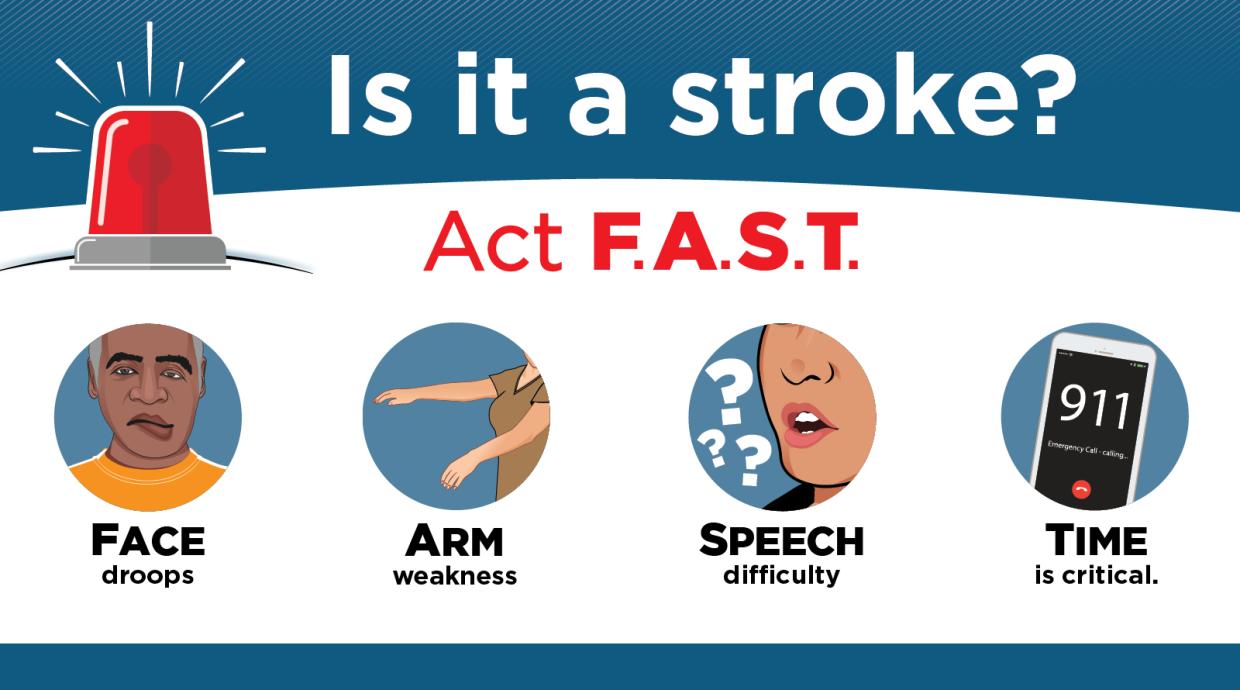
A stroke or brain attack occurs when there is an interruption of the blood supply to the brain. When the blood supply is unable to get to the brain this can cause confusion, impaired vision, sudden weakness, immobility and troubled speech. The symptoms will be dependent on the location of where the stroke occurs. There are two types of strokes that can occur an ischemic and hemorrhagic stroke. An ischemic stroke is caused when there is a blockage of blood supply to the brain, this is the more common type of stroke. A hemorrhagic stroke is caused when there is a bleed in the brain, this is caused when a blood vessel bursts. Those that are at a higher risk of a stroke are those individuals that have conditions like, diabetes, high blood pressure, high and cholesterol levels. However, strokes can happen to anyone. Since anyone is susceptible it is important to learn the signs. The obvious signs to look for can be remembered by the acronym, F.A.S.T. F is for face, such as a facial droop. A is for arm weakness. S is for speech difficulty. T is for time; time is crucial during a stroke episode. The faster it is detected, the faster the individual can receive the proper care and the effects will most likely be minimized.
“The Internet Stroke Center.” The Internet Stroke Center. An Independent Web Resource for Information about Stroke Care and Research., http://www.strokecenter.org/patients/about-stroke/what-is-a-stroke/.
Reducing the amount of sugar that Americans drink per year would help address the issue of excess sugar consumption in America. Excess sugar consumption can lead to an increased risk of heart disease, diabetes, and high blood pressure. According to the CDC, “The prevalence of Americans who drink SSB (sugar-sweetened beverages) at least once per day differs geographically. For example, 68% among adults living in the Northeast, 67% among adults living in the South, 61% among adults living in the West, and 59% among adults living in the Midwest reported drinking SSBs one or more times per day.” (CDC, 2017). Those are incredibly high statistics, regardless of the region, well over half of Americans are consuming some sort of sugary beverage daily. I recently saw that Panera Bread started distributing beverage cups with a table stating the sugar content per beverage choice. I thought this was brilliant! It made me think twice before making my choice of drink. Providing the information so bluntly to consumers at the time before they are going to make their beverage choice could help a majority of Americans make better choices. I think, most Americans know soda is bad, however, they do not think about this consistently. Having the FDA mandate that all restaurants who serve beverages provide this information on the cups would make a difference. There is no better opportunity to impact someone’s behavior than right before they have the choice to. This type of corrective behavior is similar to when you are driving, you are more aware and willing to adjust your driving speed when you see a police officer on the road. This is not to say you would speed regularly, however you may not be as conscious or willing to check unless made aware. Education is key in preventative care, there is no better time to provide education than when there is an opportunity to apply it.
“Get the Facts: Sugar-Sweetened Beverages and Consumption.” Centers for Disease Control and Prevention, Centers for Disease Control and Prevention, 27 Feb. 2017, http://www.cdc.gov/nutrition/data-statistics/sugar-sweetened-beverages-intake.html.

Tuberculosis (TB) is a bacterial infection that primarily affects the lungs (Mayo Clinic, 2019). In some cases, it can also impact other areas of the body like the kidneys, spine, and brain. Tuberculosis has two forms, latent TB and active TB. Latent TB is when the bacteria is present in the body, but does not show any symptoms (Mayo Clinic, 2019). This form of TB is not contagious. However, it can turn into active TB which is. Like the name suggests, active TB is when the condition is present and causes an individual to feel sick (Mayo Clinic, 2019). Some of the symptoms that are associated with active Tuberculosis are a persistent cough lasting more than 3 weeks, chest pain, fatigue, fever and loss of appetite. The symptoms can also vary depending on where the infection is located. For example, tuberculosis in the spine can cause back pain (Mayo Clinic, 2019). The spread of Tuberculosis can occur via droplets released into the air from person to person. Including airborne transmissions such as: speaking, laughing and coughing. The best form of prevention is vaccination and practicing good hygiene. Those that are at the highest risk of acquisition are those that are immunocompromised. However, anyone can get Tuberculosis. It is important to seek medical help if you believe you are experiencing any of these symptoms in order to stop the infection from progressing.
“Tuberculosis.” Mayo Clinic, Mayo Foundation for Medical Education and Research, 30 Jan. 2019, http://www.mayoclinic.org/diseases-conditions/tuberculosis/symptoms-causes/syc-20351250.
Pneumonia is an infection that aggravates the air sacs in either one or both lungs. The infection can be caused by bacteria, virus or fungi. The air sacs called alveoli can be expected to fill with fluid or pus during a pneumonia infection (Mayo Clinic, 2018). A productive cough, dyspnea, fever, chills and fatigue are some of the expected symptoms. The symptoms will vary depending on the cause of the infection, age, and health status (Mayo Clinic, 2018). There are two main acquisitions for pneumonia, community acquired and hospital acquired. Hospital acquired pneumonia tends to be more serious, because the individual will most likely have an underlying condition in order to be hospitalized. Children below the age of 2 and adults over 65 years old are at the highest risk to attract the infection. However, pneumonia can affect anyone at any age. The treatment for pneumonia will vary depending on the severity. Severity can range from mild to life-threatening.
“Pneumonia.” Mayo Clinic, Mayo Foundation for Medical Education and Research, 13 Mar. 2018, http://www.mayoclinic.org/diseases-conditions/pneumonia/symptoms-causes/syc-20354204
.
Unfortunately, there is currently no cure for HIV. Fortunately, it is preventable. The key to prevention lies in education. Education that includes how the transmission can transpire. Transmission can occur through blood, semen or vaginal fluids. Those parameters put individuals that are sexually active, abuse drugs and infected mothers and infants at risk. HIV education can cause a behavioral change that in turn will reduce the transmission rates. Behavioral changes like wearing a condom during sex can inhibit the transmission. In addition, providing support and education to those who suffer from drug addiction can create a behavioral change that will inhibit the ability of HIV transmission. Changes in behaviors like stopping the usage of used needles that could cause exchange in blood would impact the HIV epidemic.
HIV education can also include discussing the symptoms. The early stages of HIV, called the acute stage, is an asymptomatic period. Due to this, it is important to get tested early. Early detection is crucial in allowing the individual to live a longer, more comfortable life. This is possible through the compliance of antiretroviral therapy (ART). Individuals can take full advantage of the advancements of ART through early HIV detection. Nowadays, individuals can purchase at home HIV tests. These tests can be purchased at local drug stores. Having the ability to self-screen in the comfort of one’s home can increase the chances of early detection. Early detection is key for those who have contracted the infection. Educating those who do contract the infection is also vital because this can contain the spread. There may currently not be a cure for HIV, but there are practices that may be followed to limit the spread of this infection.
Ellis, Mary Ellen. “HIV vs AIDS: What’s the Difference?” Https://Www.healthline.com/Health/Hiv-Aids/Hiv-vs-Aids, 26 Apr. 2018, http://www.healthline.com/health/hiv-aids/hiv-vs-aids.
HIV and AIDS are topics that are often presented in pairs. However, it is important to note their distinctions. The biggest distinction between the two is that, HIV is an infection and AIDS is a condition. Human immunodeficiency virus or HIV deteriorates an individual’s immune system; this deterioration causes the body to have a weakened ability to fight off infections. The symptoms that may occur when HIV is transmitted can be described as flu-like. Fever, sore throat, and fatigue can be expected. Symptoms may vary depending on the stage of the infection. An individual may be unaware that they have contracted the infection within the first few months because they are asymptomatic. This is called the acute infection stage, typically less than 12 weeks once the infection has been transmitted. HIV can turn into AIDS during what is called stage 3 HIV. Acquired Immunodeficiency Syndrome or AIDS is a condition that occurs from an HIV infection. This condition happens when HIV has caused severe damage to the immune system. Symptoms for this condition can also vary person to person. “Symptoms of stage 3 HIV are related to the infections a person may develop as a result of having a damaged immune system that can’t fight them as well. Known collectively as opportunistic infections, they include tuberculosis, pneumonia, and others.” (Ellis, 2018). It is important to note that, AIDS cannot occur without HIV being present in the body first. Additionally, having HIV does not necessarily mean an individual will get AIDS. AIDS can be prevented. Prevention is possible through early detection of HIV. Compliance with antiretroviral therapy can prevent AIDS from developing.
Ellis, Mary Ellen. “HIV vs AIDS: What’s the Difference?” Https://Www.healthline.com/Health/Hiv-Aids/Hiv-vs-Aids, 26 Apr. 2018, http://www.healthline.com/health/hiv-aids/hiv-vs-aids.
One of my previous posts about the Keto diet sparked a comment comparing this to the Atkin’s diet. I have heard this comparison before, however I do not know much about it, other than the foundation of this diet also being low-carb. The Atkin’s diet rose to popularity in the 1970’s, when Dr. Charles Atkin’s, published a book promoting this diet. The biggest appeal of this diet is weight loss. Advocates for the Atkin’s diet claim that, “you can lose weight while eating as much protein and fat as you want, as long as you avoid foods high in carbs.” (Gunnars, 2018). Specifically, consuming less than 20 grams of carbohydrates per day, during the first phase. Sounds great, right? Endless bacon and cheese. Studies have shown that following a ketogenic diet, like the Atkin’s diet, can result in weight loss (Gunnars, 2018). But, how? Is it the bacon and cheese? Not exactly. Eating a lower carbohydrate diet, will cause a natural appetite suppression. This is a side effect of being in a state of ketosis. Being in a naturally suppressed state will in turn cause a decrease in calorie consumption. Consuming less calories generally will cause a caloric deficit, this is what is causing the weight loss. It is important to remember that, weight loss can only occur when there is a caloric deficit taking place. Following a ketogenic diet, like the Atkin’s diet, can make it easier for some to be in a caloric deficit. Dr. Atkin’s does include additional phases in order to create sustainability after the desired weight loss is achieved. This diet slowly begins to incorporate carbohydrates into the diet with the additional phases 2 through 4. If traditional, guided calorie cutting is unsuccessful for you, maybe following a ketogenic diet like this could be a better option. Always consult with your primary care physician or dietician, before changing your diet.
Overall, the Atkin’s diet is similar to the keto diet being promoted today. I figured that it would, because it is also a ketogenic diet. The biggest difference I discovered was in its transitional phase. The ketogenic today is often promoted as a diet that can be followed long term. It does not offer transitional phases where carbohydrates are reintroduced into the diet. I do like this aspect of the Atkin’s diet. I think, it is important to promote a healthy relationship with all macronutrients. Phases 2 through 4, of the Atkin’s diet, does this by slowly reintroducing carbohydrates. I do not think fearing carbs is the end-all-be-all answer to weight loss. Carbohydrates can be incorporated into a healthy, balanced diet. My belief is that weight loss is only part one of the journey. The second part and arguably the hardest is weight loss management. Following a guided diet like the Atkin’s diet, that provides transitional phases into maintenance is important and valuable in respect to sustainability.
Gunnars, Kris. “The Atkins Diet: Everything You Need to Know.” Https://Www.healthline.com/Nutrition/Atkins-Diet-101, 2 Aug. 2018, http://www.healthline.com/nutrition/atkins-diet-101.
I wanted to elaborate on my last blog post about the importance of sleep, specifically how sugar can impact sleep patterns. Sugar can impact sleep patterns in a multitude of ways, typically in a negative fashion. The two factors I am going to be focusing on today in relation to sleep are: the impacts of sugar and appetite cravings and sugar and increased inflammation.
The consumption of sugar activates the brain’s reward system; this is part of why it is so addicting. The reward system will release dopamine that creates feelings of satisfaction and pleasure. This positive, addictive feeling is what causes us to consume more and more sugar. Consuming an excess of sugar will cause disruption in sleep patterns. In addition, poor sleep patterns can height sugar cravings. This is due to the fact that, “poor quality and insufficient sleep interfere with the normal production and function of appetite-regulating hormones including leptin and ghrelin. Poor sleep also interferes with insulin, the hormone that is a key regulator of blood sugar.” (Breus, 2019). A strong sweet tooth can create a tough, hard to break cycle of disturbed sleep and overstimulated appetite cravings.
The relationship between inflammation and sleep is not talked about often. However, both sleep and inflammation are regulated by our bodies circadian rhythm. Inflammation and sleep have a co-dependent relationship. In other words, if your sleep is not up to par, your inflammation is increased. Poor sleep quality can increase inflammation, but how exactly does inflammation effect sleep? According to Dr. Breus, inflammation can prompt physical and psychological changes that can create difficulties when trying to fall asleep. Physical impacts include things like body stiffness. Additionally, “inflammation comes with the presence of cytokines, chemical messengers that have been shown to regulate sleep. Elevated cytokines have been linked to trouble sleeping and to insomnia.” (Breus, 2019).
If you are having trouble getting good, quality sleep, take a look at these possible culprits. Perhaps a negative cycle with sugar intake or inflammation could be your culprits. Improving your sleep quality can take time, so it is important to document your results daily. Record good sleeps and bad sleeps. Figure out the contributing factors to both the good and the bad. This could help find the best sleep regime for you!
Breus, Michael. “4 Ways Sugar Wrecks Your Sleep.” Your Guide to Better Sleep, 30 Jan. 2019, thesleepdoctor.com/2019/01/29/4-ways-sugar-wrecks-your-sleep/.
Sleep is an element that is often overlooked when thinking about creating a healthier, well-rounded lifestyle. Things like consuming the right foods and exercise are generally the elements that rise to the surface of importance, not sleep. However, sleep should be a valid consideration. Getting a sufficient amount of sleep is vital for the proper development of the body. It can help you achieve the health goals you desire, whether that be weight loss or weight gain. Your health goal may not even be related to weight, but rather mental health. Adequate amounts of sleep can also help with this, too. Sleep allows the body to recover and replenish the deterioration that was caused during daily activity. For adults between the ages of 18-60, the recommendation is 7 plus hours of good, quality sleep (Fletcher, 2019). The quality is in reference to how well you feel after waking up and not waking up consistently in the middle of the night. Variables that can impact the quality of your sleep are diet and inconsistency of the time you go to bed. Small changes like reducing the amount of sugar or caffeine you consume before bed and setting a bedtime for yourself, will help improve the quality of your sleep. Start by making small changes like the ones mentioned, implement them on a consistent basis, and monitor your results. See what improving your sleep quality can do for you!
Fletcher, Jenna. “Why Is Sleep Essential for Health?” Edited by Debroah Weatherspoon
https://www.medicalnewstoday.com, 31 May 2019, http://www.medicalnewstoday.com/articles/325353.

 Body Benefiting